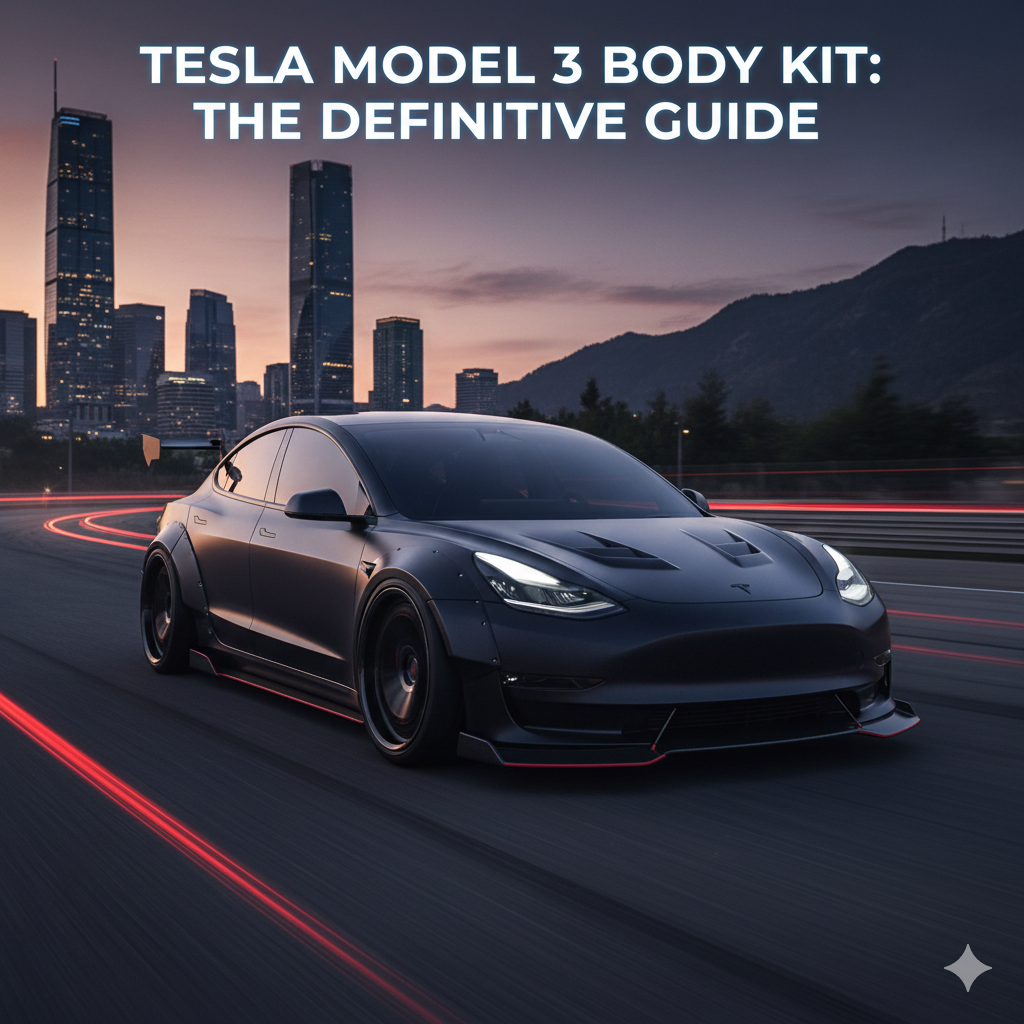
The Tesla Model 3 redefined the electric vehicle landscape, offering blistering performance, cutting-edge technology, and a sleek, minimalist design. Yet, for many enthusiasts, “minimalist” is just a starting point. The aftermarket world has exploded with options for owners who want their Model 3 to reflect their unique style and push the boundaries of performance. Tesla Model 3 Body Kit
This is the definitive guide to the Tesla Model 3 body kit—exploring everything from mild aerodynamic upgrades to aggressive widebody transformations. We’ll dive into the top manufacturers, discuss the crucial role of aerodynamics, break down costs, and cover the important legal considerations before you take the plunge.
The Dual Purpose: Aesthetics Meets Aerodynamics
When considering a body kit for your Model 3, you are signing up for more than just a visual upgrade. Body kits are typically comprised of several key components that work in harmony to manipulate airflow around the vehicle, a crucial element for any high-performance electric car.
Key Body Kit Components and Their Function
| Component | Function (Aero Benefit) | Aesthetic Impact |
| Front Splitter/Lip | Extends the front bumper, creating a low-pressure area underneath the car to increase front downforce and reduce lift. | Gives the front a lower, more aggressive stance. |
| Side Skirts | Manage airflow along the sides, preventing high-pressure air from spilling underneath the car, which helps reduce drag and increase overall stability. | Visually lowers the car’s profile and adds a sporty line. |
| Rear Diffuser | Accelerates the air exiting from beneath the car, creating a strong low-pressure zone to suck the car to the road (rear downforce). Often improves battery cooling efficiency. | A defining motorsport look, dramatically increasing the car’s aggressive rear presence. |
| Spoiler/Wing | Directs air over the rear decklid, creating downforce to keep the rear end planted, which is vital for high-speed cornering stability. | Enhances the car’s race-inspired look. |
| Widebody Fender Flares | Accommodates much wider wheels and tires, which dramatically increases mechanical grip and a lower center of gravity. | The ultimate aggressive, track-ready aesthetic transformation. |
In the world of EVs, aerodynamic efficiency is paramount. A well-designed aero kit can not only improve high-speed handling and stability but also potentially reduce drag, thus contributing to a marginal improvement in battery efficiency and range.
The Landscape of Tesla Model 3 Body Kit Manufacturers
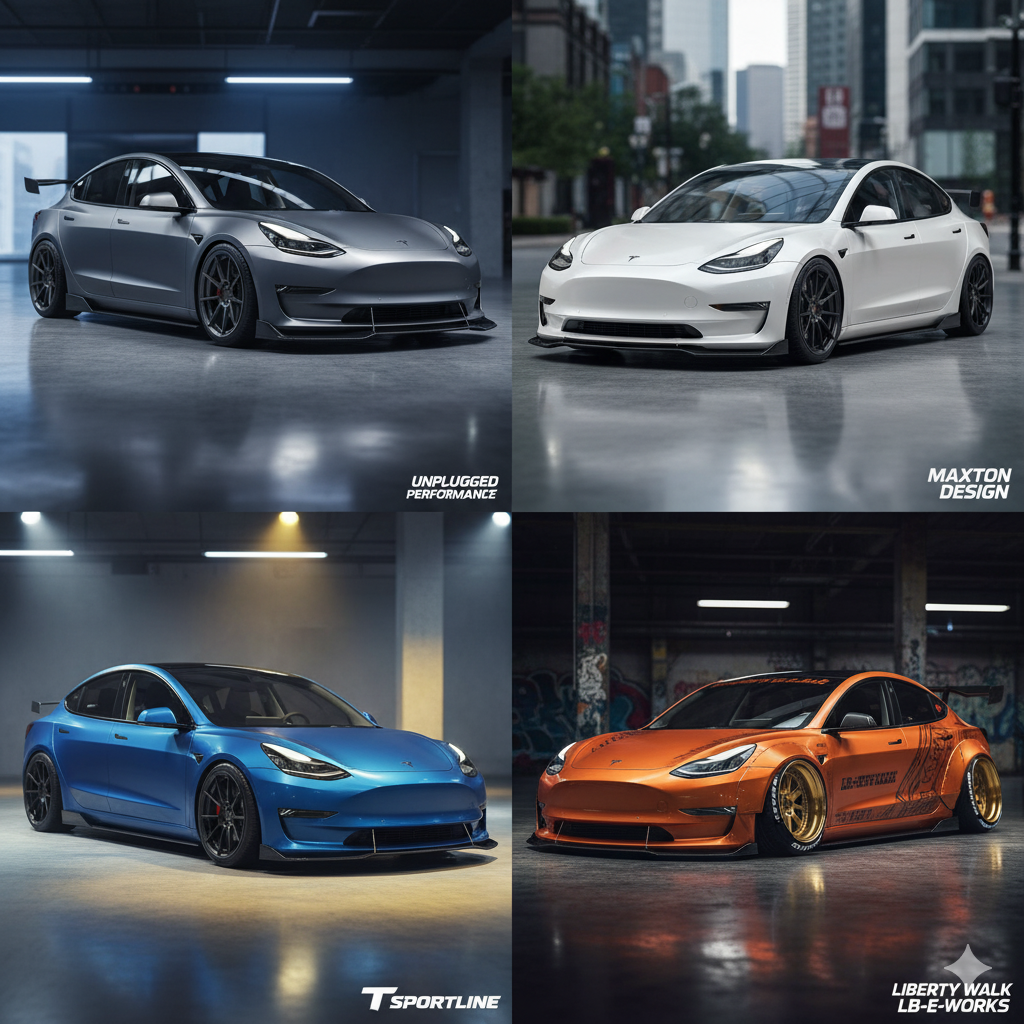
The market for Tesla Model 3 body kits is vibrant, catering to all tastes, from subtle carbon fiber accents to full-blown, track-focused widebody conversions. Here are some of the most popular and respected names in the space, particularly for 2024 and newer models:
1. Unplugged Performance (UP)
Unplugged Performance is arguably the most well-known and respected Tesla tuner, with a focus on performance-engineered parts.
- Focus: Race-derived aerodynamics and track performance. Their kits are often tested using Computational Fluid Dynamics (CFD) to ensure real-world performance gains, such as increased stability and downforce.
- Signature Product: The Carbon Fiber Full Aero Kit (designed for models including the new 2024+ Performance/Highland) is a comprehensive set that includes front lips, canards, a racing diffuser, and a substantial rear wing. These parts are typically made from high-quality prepreg dry carbon fiber.
- Price Point: High-end (reflecting premium material and performance engineering).
2. Maxton Design
Maxton Design is popular for offering sleek, aggressive aesthetic kits at a more accessible price point.
- Focus: A balance of sport styling and affordability, often utilizing materials like high-quality ABS or polyurethane.
- Signature Product: They offer various versions of front splitters, side skirts, and rear valances (V.1, V.2, V.3) for both pre- and post-facelift Model 3s, giving owners multiple aesthetic choices.
- Price Point: Mid-range and accessible for individual components.
3. T Sportline
As one of the original Tesla aftermarket companies, T Sportline focuses on offering a complete range of customization options.
- Focus: Comprehensive styling, including body kits, wheels, and interior upgrades. Their body kit options tend to be visually aggressive but often maintain a high degree of daily drivability.
- Signature Product: Their Carbon Fiber Sport Package offers a cohesive look with front bumper fascias, side skirts, and a spoiler.
- Price Point: Mid-to-High range.
4. Liberty Walk (LB-E-WORKS)
For the enthusiast who wants the most extreme look possible, Liberty Walk’s widebody designs are legendary.
- Focus: Ultra-aggressive, rivet-on widebody aesthetics. This is a purely visual modification that dramatically changes the entire character of the car.
- Signature Product: The LB-E-WORKS TESLA Model 3 widebody kit, which features massive overfenders that require cutting into the original fenders.
- Price Point: Premium/Luxury (reflecting brand name and extensive modification required).
Decoding the Price Tag: Cost and Installation
The cost of modifying your Tesla Model 3 with a body kit can vary dramatically based on the type of kit, the materials used, and whether you choose to install it yourself.
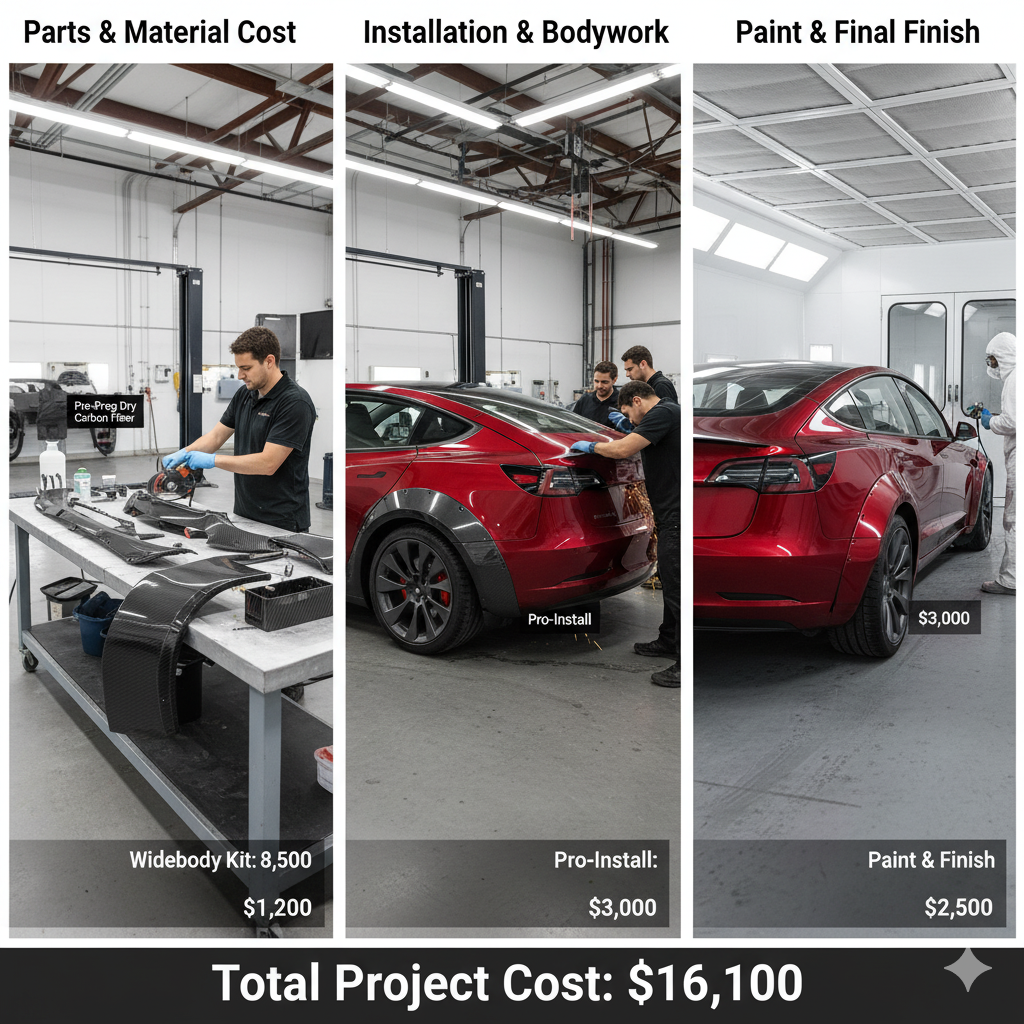
Material vs. Cost for Full Widebody Kits
The material is the largest determinant of the kit’s price, due to manufacturing complexity, weight, and strength.
| Material | Cost Range (Kit Only) | Installation Difficulty | Characteristics |
| Carbon Fiber | $3,000 – $15,000+ | High | Lightweight, highest strength, premium look (often gloss or satin weave). Used in high-performance aero. |
| Polyurethane (PU) | $1,000 – $3,500 | Medium | Durable, flexible (less prone to cracking from bumps), easy to paint, common for lip/splitter kits. |
| ABS Plastic | $800 – $2,500 | Medium-Low | Durable and affordable, often used for smaller aero parts like splitters and spoilers. |
| Fiberglass (FRP) | $5,000 – $10,000 | High | Lighter than plastic, but brittle and requires significant prep work for a smooth finish. Less common for modern Tesla kits. |
Note on Widebody Kits: Full widebody conversions, like those from ADRO, Robot Craftsman, or Liberty Walk, often start at $5,000 to $10,000 just for the parts.
Installation and Paint Costs
The price of the kit itself is only half the battle. A professional installation is almost always recommended to ensure proper alignment and safety.
- Professional Installation (Standard Kit): For a simple front lip and side skirt installation, expect to pay $200 to $500.
- Professional Installation (Full Aero Kit): A full front-to-rear kit can run from $500 to $1,500, depending on complexity.
- Widebody Installation: This is a major job. It involves cutting the original fenders, custom mounting the overfenders, and extensive body work. Professional installation, including paint matching and blending, can easily add $3,000 to $8,000 to the total cost.
Total Cost Estimate: A high-quality full carbon fiber aero kit (parts and install) will generally cost between $4,000 and $7,000. A full widebody conversion can easily reach $10,000 to $20,000 or more.
Important Considerations Before You Buy
Before you click “Add to Cart” on your dream body kit, there are a few critical factors to keep in mind, particularly with a high-tech EV like the Model 3.
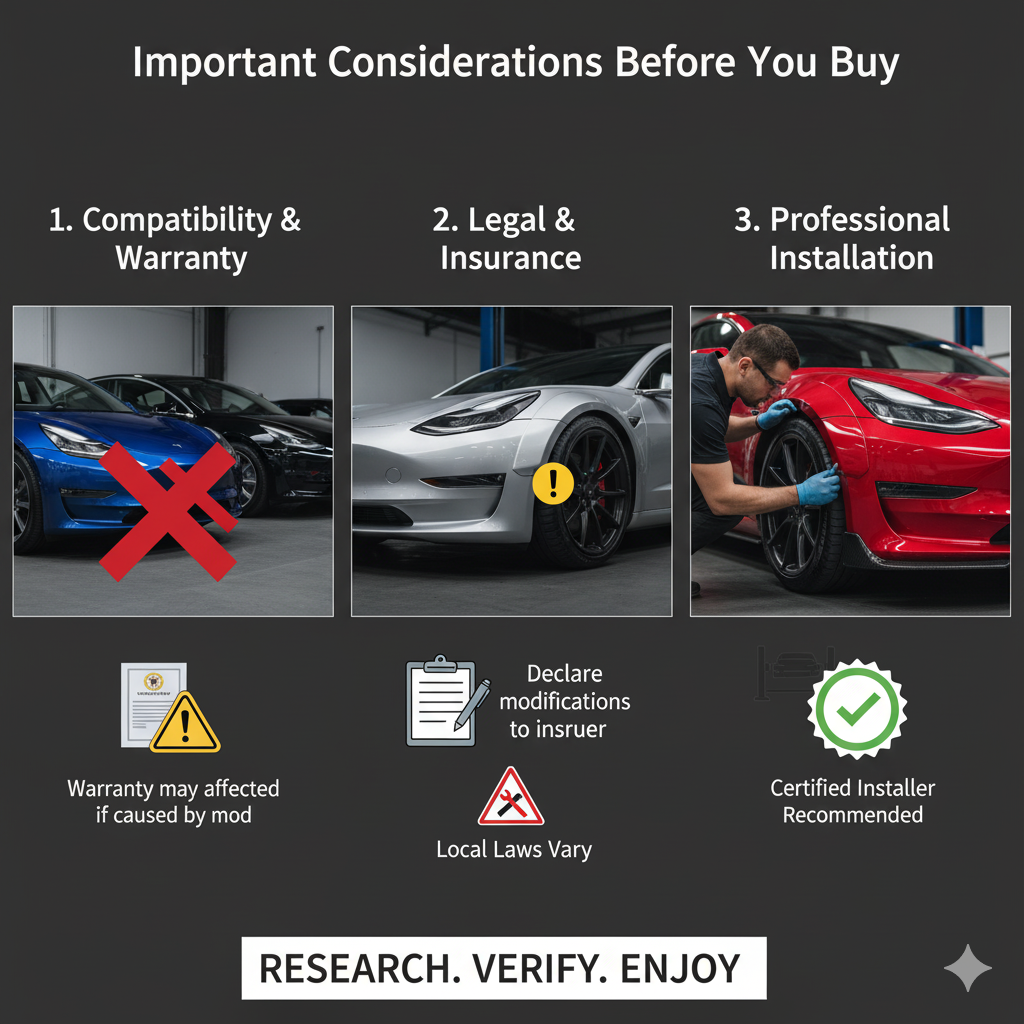
1. Compatibility and Model Year
The Tesla Model 3 has seen multiple design revisions, most notably the Highland facelift (2024+ in many markets). A body kit designed for a 2018-2023 Model 3 will not fit the new 2024+ models due to changes in the front bumper, headlight design, and other body panels. Always double-check the product description for the exact year and model compatibility.
2. Warranty and Insurance Implications
- Tesla Warranty: Installing an aftermarket body kit does not automatically void your vehicle’s warranty. However, if a failure in an original component is directly caused by the modification (e.g., poorly installed aero parts causing damage to a bumper or electrical system), Tesla may deny a warranty claim for that specific component. Always use professional, certified installers.
- Insurance: Any significant modification should be reported to your insurance provider. Failure to do so could result in a denied claim if the car is damaged or stolen. Your premium may increase slightly to cover the cost of the added parts.
3. Legal Compliance
Vehicle modification laws vary significantly by region. Body kits, particularly widebody conversions, can affect factors like vehicle width, tire exposure, and ground clearance.
- Tire Exposure: Some jurisdictions have strict laws requiring the wheel and tire tread to be covered by the fender. Widebody kits and aggressive wheel setups must adhere to these rules.
- Sharp Edges: Aero components, especially those with aggressive canards or sharp splitters, must not have excessively sharp edges that could pose a safety hazard to pedestrians.
- Certification: Some regions (like those following GCC or TÜV standards) require aftermarket parts to carry specific compliance markings. Always check local laws before installing.
Conclusion: Customizing the Future of Driving
The Tesla Model 3 is a blank canvas of immense potential, waiting for owners to imprint their personality. A body kit is the single most dramatic way to transform your vehicle, giving it a unique presence that commands attention.
Whether you opt for the subtle, performance-focused carbon fiber of Unplugged Performance, the aggressive bolt-on style of Maxton Design, or the extreme road presence of a Liberty Walk widebody, the market has matured to offer sophisticated, high-quality options.
The journey to a custom Model 3 requires careful research, a commitment to quality materials, and a professional installation. Choose wisely, respect the aerodynamics, and your modified Model 3 will not just be a personalized EV—it will be a powerful, rolling statement about the future of performance customization.